
A list of 5 cars that no longer pay IPVA this year
Advertisements
Every year, a list is released with a certain number of cars that no longer pay IPVA. Come and see the list we have put together here today!
Among all the taxes we pay here in Brazil, there are two that are quite well known, as they are charged on physical assets that Brazilians may have in their name.
The best-known taxes are IPTU (Urban Property and Land Tax) and IPVA (Tax on Motor Vehicle Ownership), which are levied on real estate and vehicles, respectively.
And although both taxes are present in the lives of Brazilians, many people still have doubts about them – and especially about IPVA, since owning a vehicle is still more affordable than owning a house.
And the biggest proof of this is that many people don't know that after a certain amount of time, it is no longer necessary to pay IPVA for your vehicle.
But how does this period work? Is there a list of vehicles that meet this condition? That's what we're going to find out today!
In today's content, we'll learn more about how IPVA works and, in addition, we'll also present you with a list of 5 cars that no longer pay IPVA this year!
Is your vehicle on this list? Just read on to find out!
What is IPVA?
As we already mentioned here in the text, the acronym IPVA means Tax on Motor Vehicle Ownership.
This tax – which came into effect in 1986 – is charged annually by state governments and was created as a way of replacing an old tax that existed throughout the national territory, and which was known as the Single Road Tax (TRU).
This tax was directly linked to spending on the country's transportation system at the time. This also included improving streets and roads.
However, unlike TRU, IPVA is not a tax necessarily collected for these purposes.
The amount collected by this tax is divided between three institutions: State, Municipality and the Federal Government.
These institutions decide which sectors of society will benefit from this investment. The main areas served by these institutions include education, mobility and health.
What criteria is used when charging IPVA?
One issue that can still confuse many people – especially those who are not familiar with the collection of this tax – is the criteria used when charging IPVA.
To charge this tax to drivers, the main criterion used is the current market price of the car.
This amount is calculated based on the market value of the vehicle, which is nothing more than an estimate that the public authorities give for the asset itself.
But, in general, this value usually varies between 1.5% and 4% of the value of the car.
And to guide itself when determining the price of the vehicle in question, the government uses the table published by the Economic Research Institute Foundation, which is better known as the Fipe table.
How long does it take to pay the IPVA?
It's time to talk about another point that raises doubts among many people: after all, how long does it take to pay the IPVA (vehicle tax) for a vehicle?
Contrary to what one might think, the country does not follow a single rule for this question.
The main reason for a car to be exempt from paying IPVA is in relation to the 'age' of the vehicle. However, the manufacturing age varies in different states of the country.
Below, we have separated a brief list of how this rule works according to the states of Brazil.
Manufacturing time – from 10 years
States that offer exemption from IPVA: Acre, Rio Grande do Norte and Roraima
Manufacturing time – from 15 years
States that offer exemption from IPVA:
Manufacturing time – From 20 years
States that offer exemption from IPVA: Alagoas, Paraná, Rio Grande do Sul and São Paulo
Manufacturing time – Manufactured until 1985
States that offer IPVA exemption: Santa Catarina.
The only Brazilian state outside this list is Minas Gerais, as this is the only state where there is no exemption from paying IPVA, regardless of the manufacturing time.
In addition to the manufacturing criteria, other reasons that are part of the IPVA exemption list are: people with disabilities (PcDs), people with cancer (in some states) and taxi drivers.
Discover a list of 5 cars that no longer pay IPVA in 2022
Now we come to the topic that many of our readers wanted to know about. Come and see the list of 5 cars that no longer pay IPVA in 2022 and find out if your vehicle is exempt from this tax.
VW Golf 2011
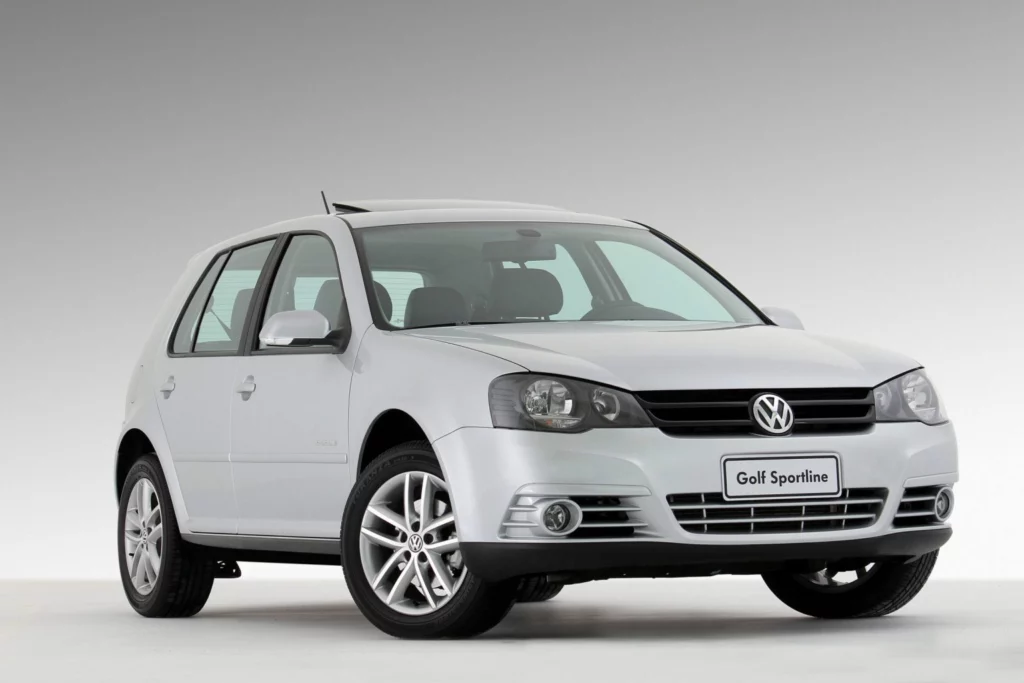
We start with one of the most famous cars here in Brazil, in addition to gathering many fans all over the world. Here in Brazil, the fourth generation of the car was the one that remained on the market the longest.
It was sold between 1998 and 2013, in addition to undergoing a restyling in 2007.
In some states, owners of the 2011 model no longer pay IPVA.
Renault Logan 2010

Another car that is over 10 years old (or more) and is exempt from paying IPVA 2022 is the Renault Logan 2010. Launched in 2007, the car is a hit here and is still for sale here.
Fiat Palio Adventure 2006

Now, in other states, the 2022 IPVA exemption rule is valid for cars manufactured up to 2006. In other words, owners of a 2006 Fiat Palio Adventure do not pay the tax, for example.
This model was based on the third phase of the Palio Weekend and had an adventurous look.
Ford Focus 2006

The first generation of the Ford Focus is also on our list. In addition to standing out as one of the most sold cars between 2000 and 2008, it had a very interesting look and even had a sedan version.
Chevrolet Meriva 2003
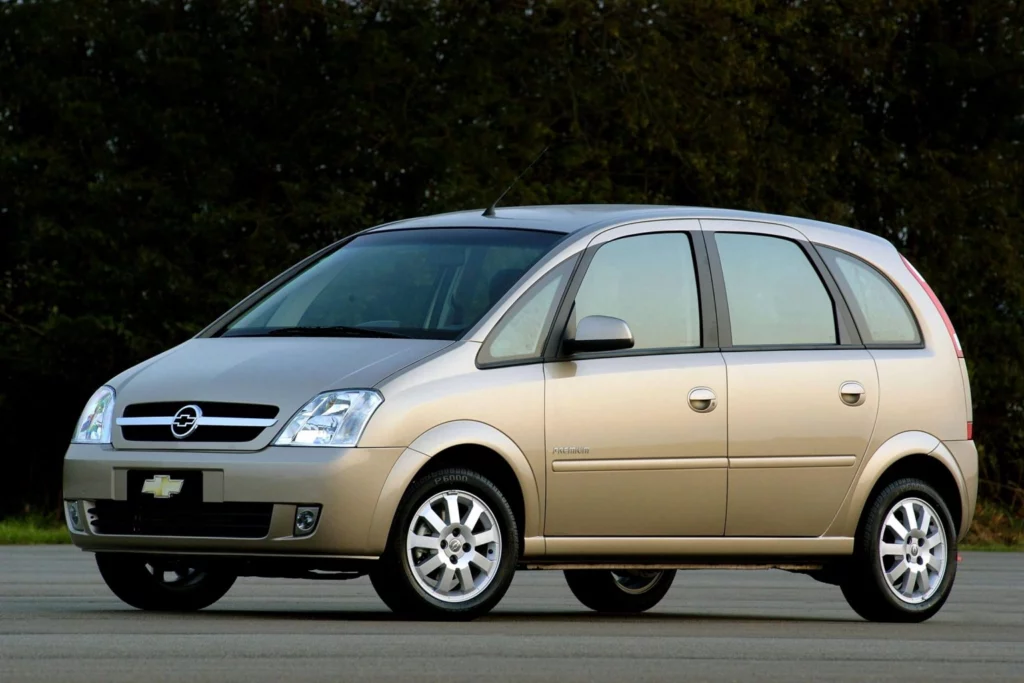
A model that also does not pay tax in some states is the 2003 Chevrolet Meriva. The car – which was launched in 2002 – arrived to be the Zafira's younger sister.
Did you like this content? Then I think you should read it too The most expensive luxury cars in the world that will dazzle you
Content created with information from Garagem360
