What is the truth about forests considered "cursed"?
To the forests considered cursed They exert an ancient fascination. There is something viscerally disturbing about the idea of a forest that devours footsteps, disorients compasses, or twists its own trunks as if responding to a hidden logic.
Advertisements
Horror stories and local folklore love to fill these gaps with the supernatural, but the explanation almost always lies in physics, biology, and, above all, in how the human brain reacts to the loss of reference points.
When science dismantles the aura of mystery, the result is not a loss of enchantment, but the discovery of an even more fascinating earthly complexity.
What many interpret as witchcraft or haunting is often the product of volcanic magnetic anomalies, soil mechanics, or unique acoustic dynamics.
To navigate this frontier where myth meets geography, we have divided this study into the following topics:
- Summary
- Why certain forests considered cursed How do they achieve this worldwide fame?
- What real mysteries explain the phenomena in the Aokigahara forest?
- What does science say about the crooked tree trunks of Hoia-Baciu?
- How do geography and climate transform ordinary forests into dangerous labyrinths?
- What are the real differences between myth and science in these regions?
- FAQ: Frequently asked questions about the topic
- Conclusion and reflection on nature preservation.
Why do certain forests considered cursed gain such worldwide notoriety?
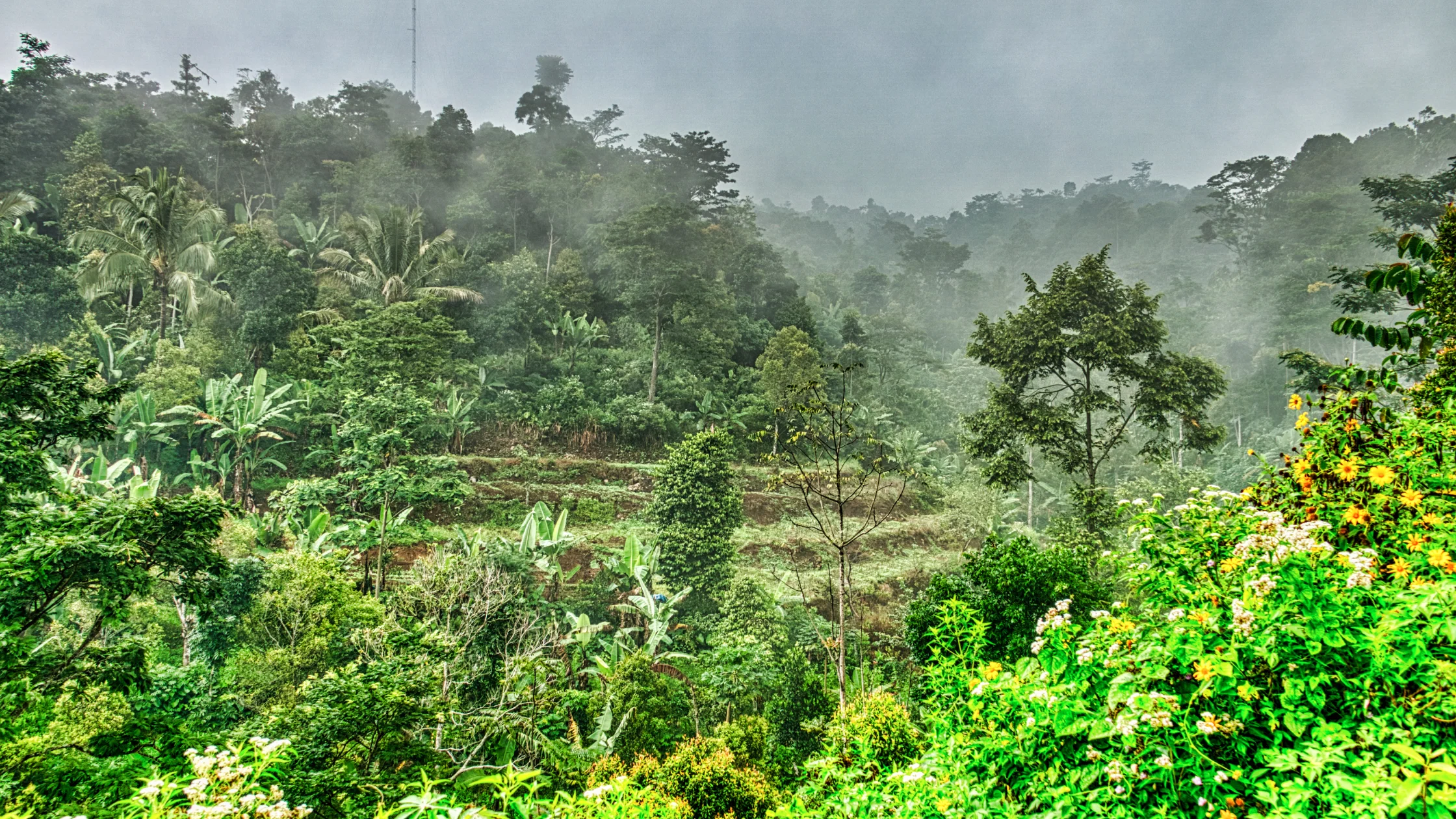
The fame of these regions says more about our neurology than about any hidden force. The brain evolved to detect patterns on the horizon; in a dense forest, where the sun barely crosses the treetops, the light fragments into shifting shadows that trigger the survival alarm.
Added to this is sensory deprivation. Without the background noise of the cities, the dense silence of the forest muffles small sounds or projects distorted echoes in unpredictable directions, keeping the nervous system in a state of permanent alert.
Pareidolia does the rest. Faced with uncertainty, the human mind insists on seeing faces in dry tree bark or figures lurking behind twisted branches, turning walking into a test of anxiety.
Over time, oral tradition and literature solidify these fears into local legends. What began as the prudent warning of an elder resident to avoid dangerous ravines takes on the contours of a curse as it is passed down through generations and fuels the dark tourism industry.
What real mysteries explain the phenomena in the Aokigahara forest?
The fame of Aokigahara, at the foot of Mount Fuji, as one of forests considered cursed One of the world's most iconic phenomena is based on a real fact: compass needles frequently malfunction and GPS signals falter.
The culprit, however, is not an ancient spell, but the geology of the region.
The ground at Aokigahara rests on a thick layer of cooled lava from the eruptions of Mount Fuji in the 9th century.
This volcanic rock contains high concentrations of magnetite, an iron mineral capable of creating local magnetic deviations that confuse analog navigation instruments.
To make matters worse, the porous crust has formed hundreds of underground cavities and ice caves that absorb sound waves. The result is claustrophobic acoustic insulation, where even screams a few meters away are lost without leaving an echo.
Add to that the monochromatic uniformity of the coniferous vegetation and the absence of visual landmarks. Just a few steps off the marked paths are enough for the sense of direction to completely collapse.
What does science say about the crooked tree trunks of Hoia-Baciu?
Near Cluj-Napoca, Romania, the Hoia-Baciu forest attracts curious visitors because of its sickle-shaped trees and a clearing where almost nothing grows.
This landscape is often attributed to dimensional portals, but botany and geology offer infinitely more earthly explanations.
The pronounced bending of the trunks is the result of a geological phenomenon known as soil creep.
On slopes with high moisture accumulation, the topsoil slides millimeter by millimeter over decades, causing young plants to bend before redirecting their growth towards the light.
Furthermore, historical human intervention has radically shaped the site. Centuries of intensive grazing, inadequate forest management, and selective logging have altered the structural growth patterns of the local vegetation.
For those who wish to follow serious analyses and data on the dynamics of forest ecosystems around the world, the portal of World Wildlife Fund (WWF) It offers comprehensive and up-to-date technical documentation.
How do geography and climate transform ordinary forests into dangerous labyrinths?
Often, we label a landscape as hostile simply because our biology wasn't designed to navigate it without technical assistance.
Uneven terrain, depressions hidden by foliage, and a lack of direct lines of sight transform a trivial walk into a logistical nightmare.
At certain altitudes, air condensation creates a microclimate of thick fog in a matter of minutes. When the fog covers the treetops, the horizon disappears, and any attempt to maintain a straight course usually fails.
Studies on orientation demonstrate that humans without visual reference points tend to walk in circles.
Since our steps have subtly unequal lengths, without a fixed point on the horizon, the trajectory involuntarily curves into spirals.
Under these conditions, physical exhaustion, a sudden drop in temperature, and psychological panic take their toll.
Most disappearances in dense forests result from this combination of climatic factors and disorientation, far from any magical intervention.
++ The Mystery of Human Footprints Found in Unlikely Places
What are the real differences between myth and science in these regions?
To understand the forests considered cursed, It is worthwhile to compare popular interpretation with scientific fact validated by field research:
| Forest and Location | Recurring Popular Myth | Scientifically Proven Explanation |
| Aokigahara (Japan) | Compasses malfunction due to the presence of spirits. | Deposits of magnetite and iron-rich volcanic lava |
| Hoia-Baciu (Romania) | Trees bent by alien forces | Soil creep, strong winds, and human intervention. |
| Black Forest (Germany) | Inhabited by folkloric creatures and witches | Coniferous vegetation so dense that it blocks sunlight. |
| Pine Barrens (USA) | The presence and roar of the Jersey Devil in the darkness. | Nocturnal fauna, such as owls and foxes, in a natural ecosystem. |
| Epping Forest (England) | Occult activities and hauntings | Historically a hideout for bandits and due to its dense terrain. |
As the table demonstrates, when we examine the facts under the microscope of science, the mystery gives way to perfectly explainable geological and biological phenomena.
This doesn't diminish the charm of the place, but it returns us to the realm of solid knowledge.
Understanding these processes is crucial to dispelling unfounded superstitions and promoting a technical appreciation of global biodiversity.
++ Ancient Maps That Still Challenge Experts
Why does human psychology create legends about dense forests?
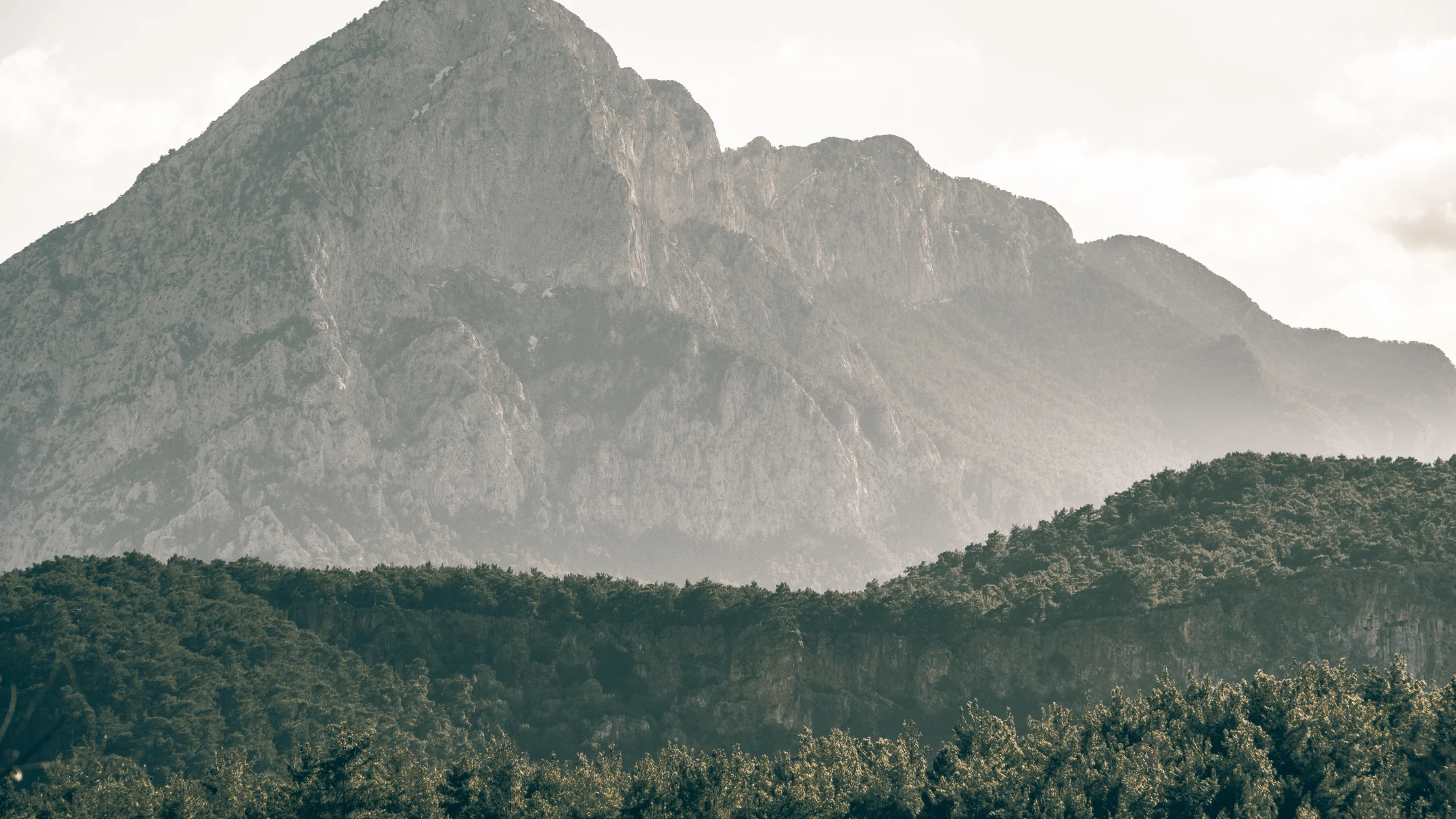
Our species has spent millennia trying to dominate the natural environment, but the dense forest remains as a reminder of our original helplessness.
Entering a dense forest means giving up the conveniences of urban architecture and accepting an environment where our senses operate at their limit.
In this scenario, the brain prefers to err on the side of caution. A snapping branch is interpreted as a predator, and the shadow of a bush takes on threatening forms—an evolutionary strategy that ensured the survival of our ancestors.
Scary stories also played a practical role in social control in ancient communities.
Narrating the presence of shadowy entities in a particular stretch of the forest was the most effective way to prevent children or inexperienced hunters from venturing into dangerous swamps.
In contemporary times, pop culture has reconfigured this fear into entertainment. The search for disturbing stories attracts thousands of explorers seeking the unknown, boosting tourist routes in remote areas.
How to navigate safely in isolated forest areas?
Venturing into areas of dense vegetation requires more than courage; it demands appropriate equipment and respect for the terrain.
Relying solely on cell phone signal is often the first planning mistake made by inexperienced travelers.
Satellite navigation devices, paper topographic maps, and well-calibrated compasses should be part of any explorer's basic kit.
Knowing how to interpret altitude contour lines on a map can be the difference between avoiding a ravine or falling into it.
It is also essential to communicate the planned route and expected return time to local authorities or rescue services in advance. If any unforeseen event occurs along the hike, the search perimeter will be clearly defined.
Finally, staying on designated trails and avoiding hiking at nightfall exponentially reduces the risk of accidents. Respecting your body's limits and the fluctuations of the weather is the golden rule for any hike in the wilderness.
What is the impact of shadow tourism on these preserved ecosystems?
The popularization of forests considered cursed It brought a complex side effect: shadow tourism (dark tourism).
While the activity generates income for surrounding populations, it also imposes severe environmental pressure on sensitive areas.
The accumulation of trash, the degradation of undergrowth, and frequent trampling outside designated areas hinder soil regeneration.
In areas of delicate ecological balance, the uncontrolled flow of people destroys young plant specimens and alters natural drainage.
In addition to the flora, the local fauna suffers from noise pollution and artificial lighting brought in by night walkers. Species with strictly nocturnal habits begin to avoid their traditional feeding and breeding areas.
Several local administrations have been establishing strict visitation limits, requiring scheduling and the presence of authorized environmental guides. The preservation of these spaces depends directly on the conscious behavior of those who visit them.
++ The Most Valuable Objects Ever Found by Chance
FAQ: Frequently asked questions about the topic
Do compasses really stop working in Aokigahara?
Yes, magnetic compasses suffer significant deviations due to the iron-rich volcanic rocks in the forest crust. However, modern devices with satellite GPS signal reception usually operate without direct geological interference.
Is it true that the Hoia-Baciu forest causes sunburn?
There is no medical evidence to support the claim that burns are caused by paranormal factors in this location. In the vast majority of cases, skin irritations occur due to contact with allergenic or stinging vegetation, or reactions to pollen during certain times of the year.
What is the most dangerous forest in the world in real terms?
The most dangerous forests on the planet are the large, dense tropical rainforests, such as the Amazon or the Darién Gap. In these places, the real risks stem from venomous wildlife, tropical diseases, extreme humidity, and the extreme difficulty of rescue operations.
What should I do if I get lost in a dense forest?
Use the STOP emergency protocol: Stop (StopThink (Think), Observe (Observe) and Plan (PlanStay calm, conserve energy, find a dry place to take shelter, and use sound or visual signals to help search teams locate you.
Conclusion: The value of science in preserving our natural mysteries.
Understanding the reality behind the forests considered cursed It does not eliminate the fascinating atmosphere that surrounds them.
Knowing that certain phenomena result from the interaction between mineralogy, climate, and botany only demonstrates the extraordinary complexity of Earth's ecosystems.
Replacing superstitious fear with scientific knowledge is the best way to ensure the protection of these areas against vandalism and environmental degradation.
The true magic lies in the planet's ability to create such unique and surprising landscapes.
To follow international efforts to conserve vulnerable habitats and global biodiversity policies, visit the portal of International Union for Conservation of Nature (IUCN).